Storm Preparedness for the Jersey Shore: What Homeowners Need to Know About the Upcoming Nor’easter

Living at the Jersey Shore means enjoying some of the best that New Jersey has to offer, but it also means knowing how quickly coastal weather can change.
Forecasters are currently tracking what could become the first significant nor'easter of the fall, with the potential to bring strong winds, heavy rain, coastal flooding, rough surf, beach erosion, and possible power outages to portions of New Jersey and the Northeast.
While the exact track and strength of the storm can still change, this is a good time for Jersey Shore homeowners to prepare, not panic.
What Is a Nor'easter?
A nor'easter is a coastal storm named for the strong northeasterly winds commonly associated with it.
Although nor'easters can occur throughout the year, they are most common between September and April. Unlike hurricanes, they do not need tropical conditions to become powerful or damaging.
For coastal communities, some of the biggest concerns can include:
- Strong winds
- Heavy rainfall
- Coastal flooding
- High surf and dangerous rip currents
- Beach erosion
- Storm surge and tidal flooding
- Downed trees, limbs, and power lines
That makes preparation especially important for homeowners throughout the Jersey Shore.
What Could New Jersey Experience?
Depending on the storm's final track and intensity, New Jersey could experience periods of heavy rain and strong winds, with coastal communities potentially seeing some of the most significant impacts.
Conditions to watch for include:
- Periods of heavy rain
- Wind gusts potentially reaching 30-40+ mph along the coast
- Coastal flooding during high-tide cycles
- Dangerous rip currents and high surf
- Beach erosion and overwash in vulnerable areas
- Possible power outages caused by downed limbs or utility lines
Coastal communities in areas such as Ocean County, Atlantic County, Cape May County, and other Jersey Shore towns should pay particularly close attention to local forecasts and emergency alerts.
A little preparation ahead of time can make a major difference if conditions deteriorate.
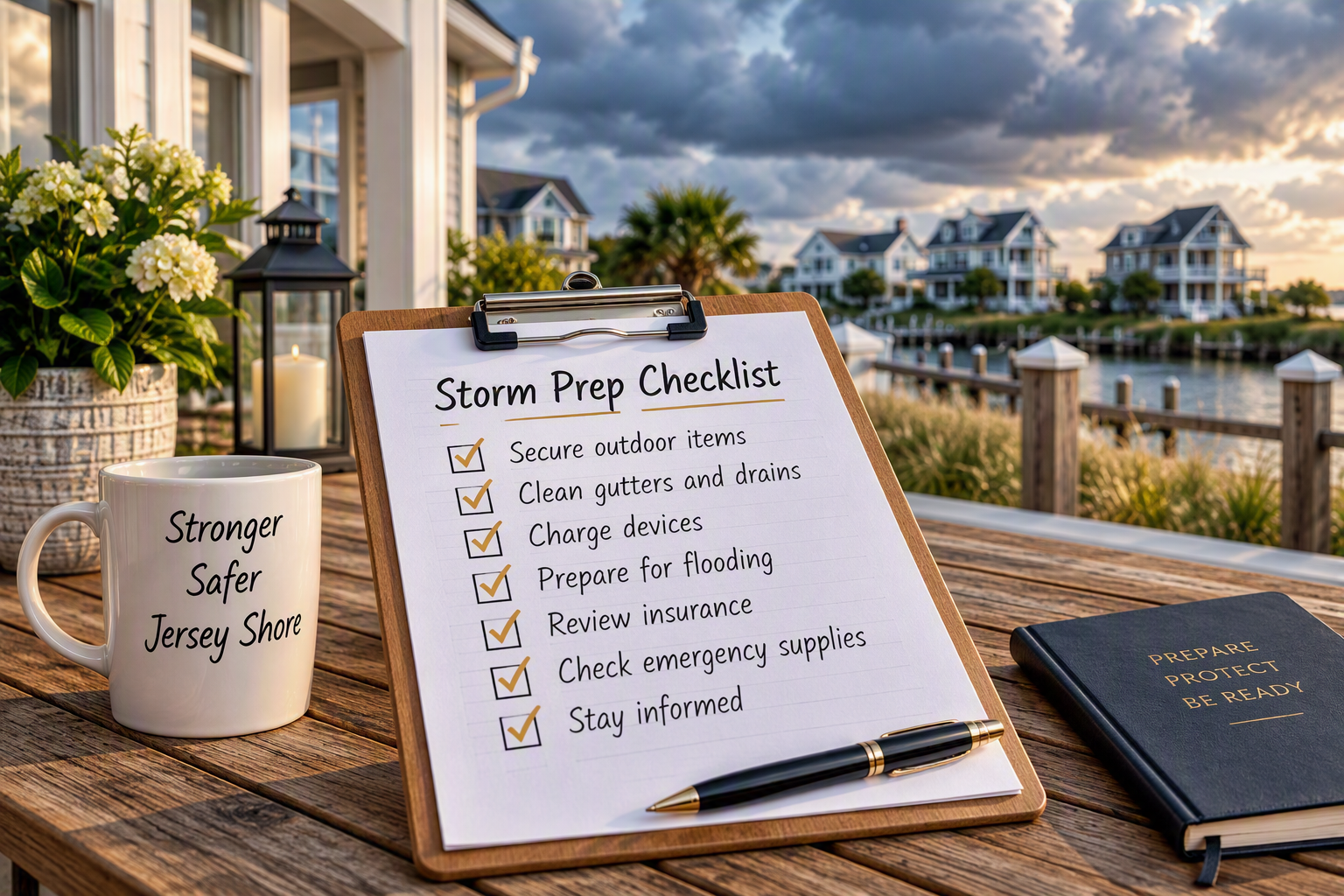
5 Things Jersey Shore Homeowners Should Do Before the Storm
1. Secure Outdoor Items
Patio furniture, umbrellas, decorations, trash cans, grills, and other outdoor items can become dangerous during strong winds.
Bring loose items inside whenever possible or make sure they are securely anchored.
Take a quick walk around your property and check porches, decks, patios, pools, and side yards for anything that could blow away.
2. Charge Your Devices and Backup Batteries
Power outages are always possible during a strong coastal storm.
Make sure your essential electronics are fully charged, including:
- Cell phones
- Portable battery packs
- Flashlights
- Laptops
- Tablets
If you rely on rechargeable emergency lights or other battery-powered equipment, now is a good time to check those as well.
3. Check Gutters, Downspouts, and Drains
Heavy rain can quickly expose drainage problems around a home.
Clear leaves and debris from gutters and downspouts and make sure water can flow away from the foundation.
If storm drains near your property are covered with leaves or debris and can be safely cleared, doing so may help reduce localized water buildup.
4. Prepare for Coastal Flooding
If you live in a flood-prone or low-lying area, pay close attention to local flood advisories and high-tide cycles.
Consider preparing now by:
- Knowing where you would move your vehicle if flooding becomes likely
- Identifying more than one evacuation route
- Keeping important documents accessible
- Reviewing your flood insurance information
- Following local emergency management alerts
Coastal flooding can sometimes occur even when the weather at your home does not appear particularly severe, so don't rely on conditions outside your window alone.
5. Stay Out of the Ocean and Away From Jetties
One of the most important storm-safety reminders at the Jersey Shore is that dangerous ocean conditions can develop before the center of a storm arrives.
Large waves, strong currents, and dangerous rip currents may occur even when skies appear relatively calm.
Avoid swimming during hazardous conditions and use extreme caution around beaches, jetties, bulkheads, and other waterfront areas.
If You're Buying a Home at the Jersey Shore
Storms like this are also an important reminder that there is more to evaluating a shore property than the house itself.
When buying near the coast, factors such as location, elevation, drainage, flood-zone designation, insurance requirements, and the property's overall resilience should all be part of the conversation.
Two homes that appear similar on paper can have very different considerations depending on where they sit, how the property handles water, and whether flood insurance may be required.
Understanding those details before you purchase can help you make a more informed decision about both the property and the long-term cost of ownership.
If You Already Own a Home
Before severe weather arrives, take a few minutes to document the current condition of your property.
Use your phone to take photos or video of:
- The exterior of your home
- Roof and siding where visible
- Decks, patios, and fences
- Outdoor equipment
- Finished interior spaces
- Major appliances
- Valuable personal property
Keep those records somewhere you can access them even if your phone or computer is damaged.
Having current documentation available can be helpful if you ever need to file an insurance claim after a storm.
Stay Informed as the Forecast Develops
Forecast models can change considerably as a coastal storm approaches.
The storm's exact track will determine how much rain, wind, flooding, and coastal impact New Jersey ultimately receives, so continue monitoring updates from trusted sources such as the National Weather Service and local emergency management officials.
Pay particular attention to coastal flood advisories, high-wind warnings, evacuation notices, and local road closures.
Final Thoughts
Prepare early. Stay informed. Take warnings seriously.
Spending a little time preparing your property today can help protect your home, your belongings, and the people who matter most if conditions worsen.
Stay safe, New Jersey. 🌊🏠
Buying or Selling Along the Jersey Shore?
Whether you're considering a move or simply have questions about a property, flood zones, location, or the home-buying process, I'm here to help.
Let's Talk