What Should You Fix Before Selling and What Should You Leave Alone?

Once you decide to sell, it's easy to start seeing your home as one long project list.
The kitchen feels dated. The hallway could use paint. And suddenly you're wondering whether you need new floors before anyone walks through the door.
Before you start spending, let's decide which projects deserve your attention. The right preparation plan depends on your home's condition, the competition, your budget and your timing.
Before you hire a contractor or start choosing finishes, let's walk through the house together. I want you to understand why a project belongs on your list before you spend money on it.
Start With What Needs Attention
A loose cabinet pull and an active leak belong in different conversations.
When something isn't working properly, or there's a concern about safety or water damage, get the issue evaluated by the appropriate professional. Understand the cause, the available options and the cost before treating it as a cosmetic project.
Fresh paint should never be used to conceal an unresolved problem.
Make It Easier to See the Home
Cleaning, reducing clutter and tidying the entrance are useful places to start. They help buyers see the rooms and features without as many distractions.
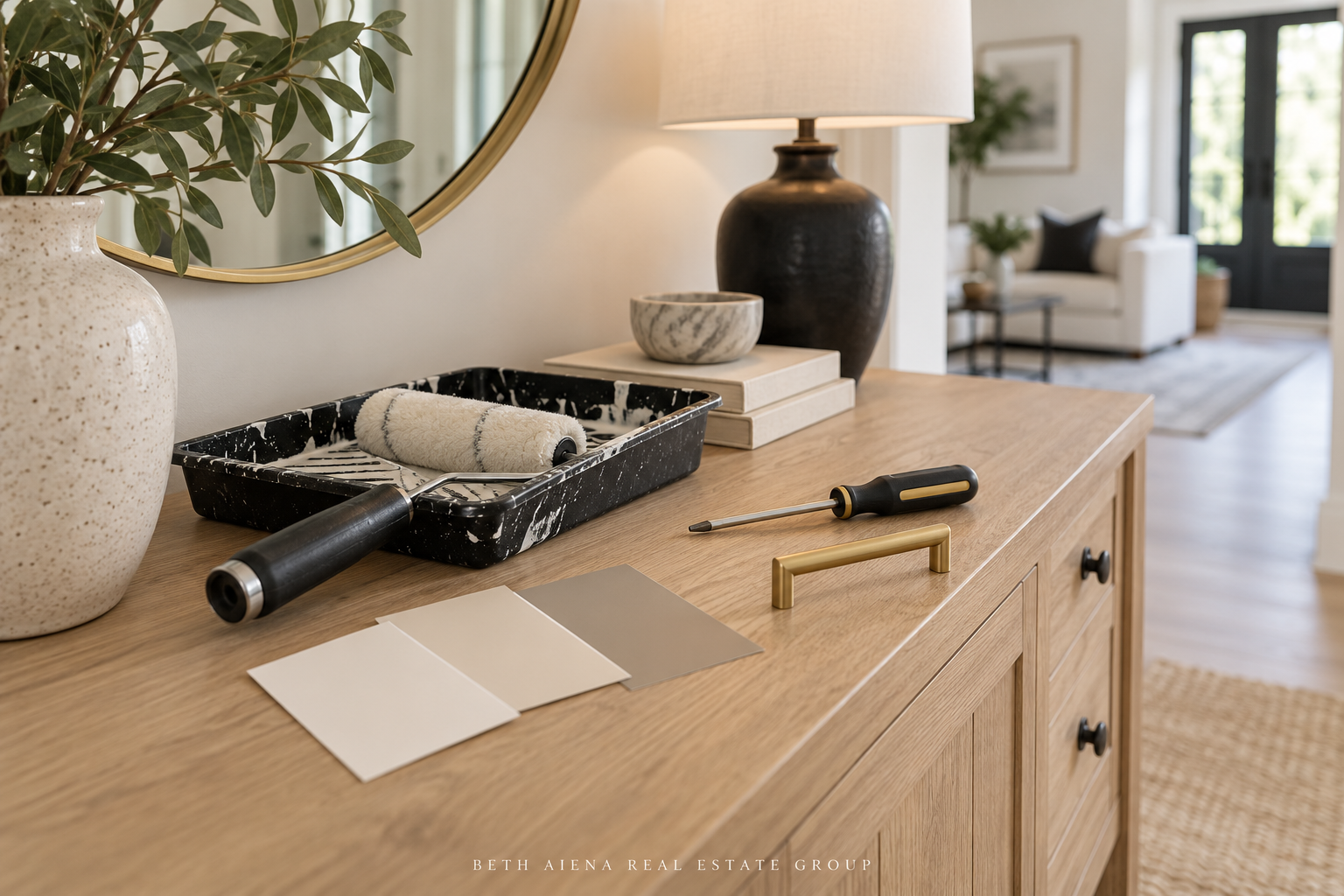
From there, we can consider targeted touch-ups: visibly scuffed walls, loose hardware or another small detail that makes a space feel unfinished.
That doesn't mean repainting every room or replacing every fixture. I want each choice to have a clear purpose.
Pause Before the Big Renovation
If you're about to leave, a new kitchen or bathroom deserves a careful conversation.
What problem would the renovation solve? How would the finished home compare with others buyers can choose? What would the project cost, and how would it affect your listing date?
I wouldn't build your selling plan around the assumption that a buyer will reimburse every dollar you spend.
Sometimes a limited refresh is worth exploring. Sometimes the better plan is to present the home well and price it with its existing finishes in mind.
Consider the cost, the time involved and the difference it could make to your home's position in the market.
What Might You Leave Alone?
Well-maintained finishes that aren't the latest style may not need replacement simply because you're selling.
Think of an older kitchen that functions well, a bathroom in good condition or a feature a future owner may want to personalize.
These are decisions to review in context. “Dated” doesn't automatically mean “replace,” just as “new” doesn't automatically mean a worthwhile pre-sale expense.
Get Information Before Making a Repair Decision
If a major item may need repair or replacement, a professional evaluation and estimate can help clarify the choices, even if you haven't decided to do the work before listing.
We can discuss how the condition fits into your preparation and pricing plan, and involve your attorney where disclosure or contract questions arise.
Choosing to leave something unchanged should be an informed decision. It shouldn't mean ignoring the issue or keeping buyers in the dark.
Your Home Needs Its Own Plan
A project that made sense for your neighbor may not be the right use of your money.
When we meet, we'll look at what your property needs, what you're comfortable investing and when you want to move. From there, we can prioritize the work and identify what deserves a second opinion.
You don't need to finish a renovation before calling me. That first conversation can help you decide what to take on in the first place.
Further reading: National Association of REALTORS®: Preparing to Sell Your Home.
Let's look at what your home needs before you commit to repairs or renovations.
LET'S PLAN YOUR HOME SALE